
Key points
- Start with an equipment register and the previous season’s fault history.
- Define the scope around the installed system and its manufacturer’s instructions.
- Request a record that includes unresolved findings as well as completed work.
Start with the previous season, not the first hot day
Before summer, the question is often simply whether the air conditioners turn on. That does not establish readiness across a building. Acceptable conditions in one room say little about another floor, condensate drainage or operation during the busiest hours.
Collect earlier complaints before booking the visit: zones with weak cooling, recurring equipment messages and locations where water appeared. Record the room, time and circumstances. That gives the technician a more useful starting point than a general statement that the system performs poorly.
Identify the system before agreeing the checklist
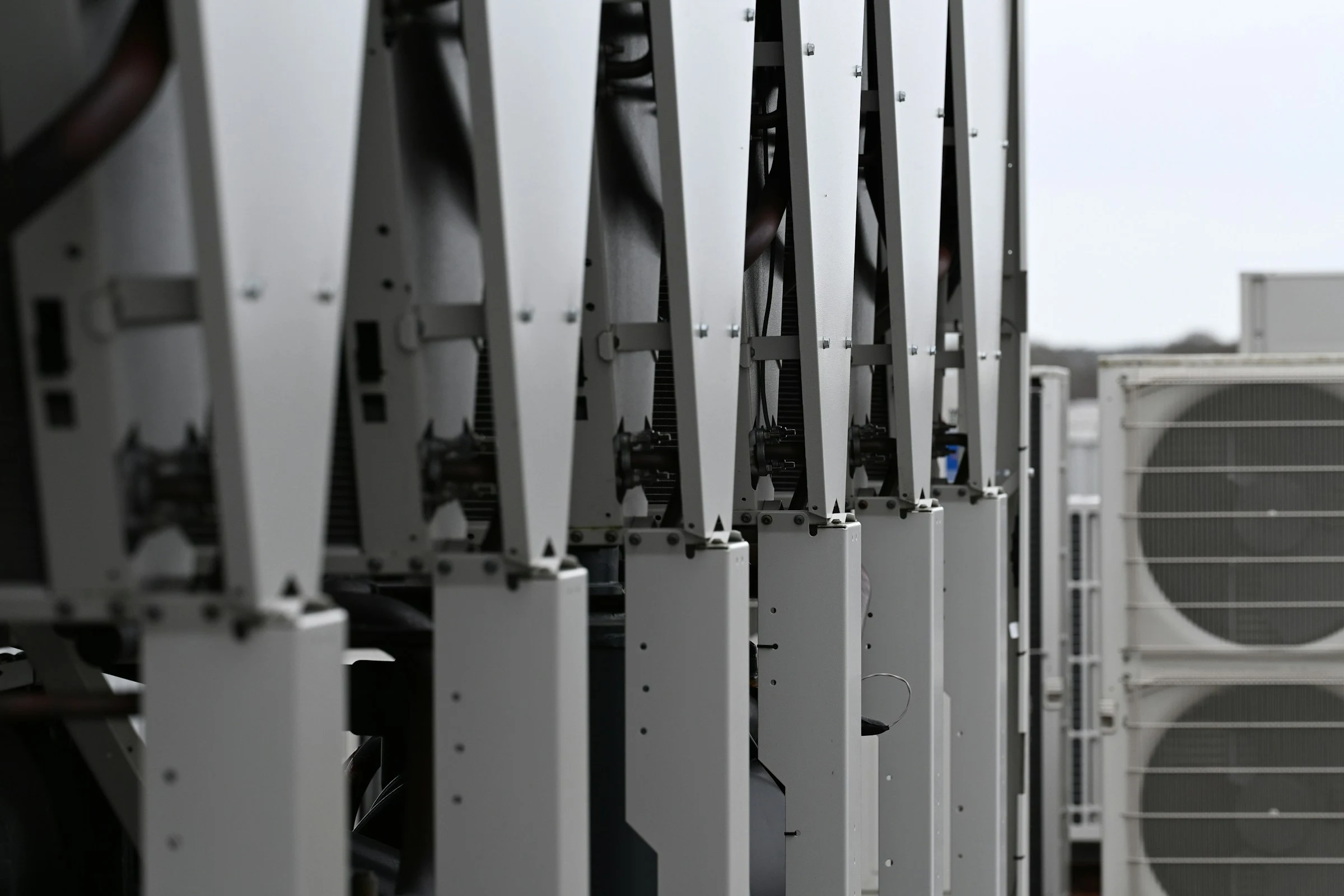
Split units, VRF/VRV installations and chiller–fan-coil systems should not be assessed against one undifferentiated task list. Establish what is actually installed, including indoor and outdoor units, water circuits, pumps and controls where applicable.
Give each asset a clear identifier. Record its location, manufacturer, model, service history and the areas it serves. A finding can then be connected to a particular piece of equipment, an affected space and a responsible contact.
Distinguish inspection from maintenance work
An inspection assesses condition. A maintenance visit may also include agreed cleaning, servicing and follow-up checks. The quotation should identify included tasks, separately charged materials and repairs that require further approval.
Filters, heat exchangers, airflow and condensate drainage are important subjects for technical review. Electrical and refrigerant-circuit work belongs with appropriately trained technicians. Methods and intervals must follow the installed equipment’s instructions and operating conditions rather than a universal timetable.
- Separate inspection, cleaning and repair in the scope.
- Arrange access to rooftops, technical rooms and occupied spaces.
- Agree the operational checks required after the work.
Describe symptoms without guessing the diagnosis
The same symptom can have different causes. Record what happened rather than prescribing a repair. This example helps prepare a work request; it is not remote fault diagnosis.
| Observation | Information to record | Question for the visit |
|---|---|---|
| Insufficient cooling in a zone | Room, time, occupancy and controller settings | Actual demand and system operation |
| Water has appeared | Exact location, time and photograph | Drainage condition and source of the leak |
| Recurring equipment message | Asset identifier and exact error text | Fault history and investigation of the cause |
| Changed noise or vibration | Affected unit and operating mode | Technical assessment of equipment condition |
Coordinate the visit with building operations
If a meeting room must be vacated to reach a fan-coil, arrange that before the technician arrives. Identify the working window, the access contact and any shutdown that must be agreed.
Consider routes for equipment, ceiling access and reinstatement of the work area. From the facility manager’s perspective, completion includes returning the space to the agreed condition as well as checking the equipment.
Make the service record useful for the next visit
A record should identify the asset and the action performed. “Preventive maintenance completed” is too vague if it does not show which unit was serviced or what remains unresolved.
Separate completed tasks, findings, required parts and proposed follow-up. Where measurements form part of the scope, record the conditions in which they were taken. The next visit can then build on an existing history.
- Asset identifier and visit date.
- Inspections and work completed.
- Open findings and their priority.
- Responsible contact and agreed next action.